
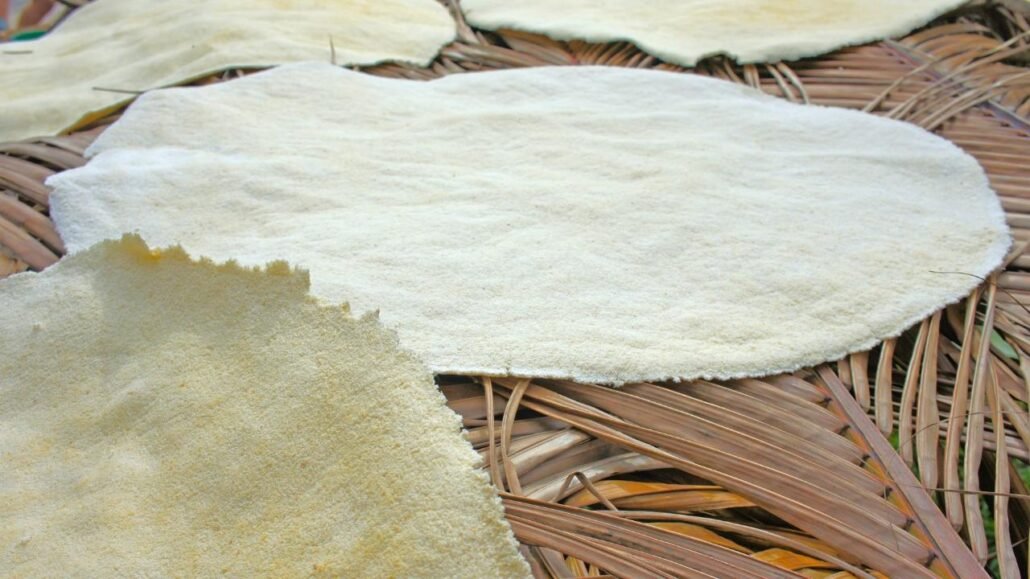
The First Flavours of Guyana: Honouring Amerindian Heritage Month
Every September, Guyana celebrates its Indigenous peoples, their cultures and their enduring contributions to the country. At the heart of that heritage is a remarkable food story shaped by the forest, rivers, savannahs and generations of knowledge.
Before Guyana had restaurants, commercial farms or printed cookbooks, its Indigenous peoples already understood how to live from the land.
They knew which plants could nourish, which roots required careful preparation, when the rivers would yield fish and how food could be smoked, dried, grated, baked or preserved. This knowledge was not written on recipe cards. It was passed from one generation to the next through observation, practice and community life.
Today, many foods considered unmistakably Guyanese still carry that Indigenous foundation.
Cassava bread, farine, cassareep, pepperpot and piwari are more than traditional foods. They are evidence of knowledge, skill and survival. They connect modern Guyana to the people who first understood the richness and complexity of its landscape.
As Guyana observes Amerindian Heritage Month this September, Taste Guyana celebrates the first custodians of the country’s food heritage and the traditions that continue to shape how the nation eats.
The roots of Amerindian Heritage Month
September has been officially observed as Amerindian Heritage Month in Guyana since 1995. The month honours the history, identity and achievements of the country’s Indigenous peoples.
September 10 holds particular significance. On that date in 1957, Stephen Campbell became Guyana’s first Amerindian Member of Parliament, an achievement that gave Indigenous communities greater national representation. His contribution continues to be commemorated during Heritage Month. Amerindian Heritage Month history
Guyana is home to nine Indigenous peoples: the Akawaio, Arekuna, Arawak or Lokono, Carib or Karinya, Macushi, Patamona, Wai Wai, Wapichan and Warrau. Each has its own language, customs, knowledge systems and food traditions. For that reason, Indigenous cuisine should never be treated as though it comes from one single, uniform culture.
Preparation methods, ingredients and names can differ from one community and region to another. That diversity is part of the heritage being celebrated.
Cassava: a foundation of Indigenous food culture
Few ingredients demonstrate Indigenous knowledge as clearly as cassava.
The root grows well in Guyana’s tropical environment and has supported communities for generations. But bitter cassava contains naturally occurring compounds that can be harmful if the root is not processed correctly.
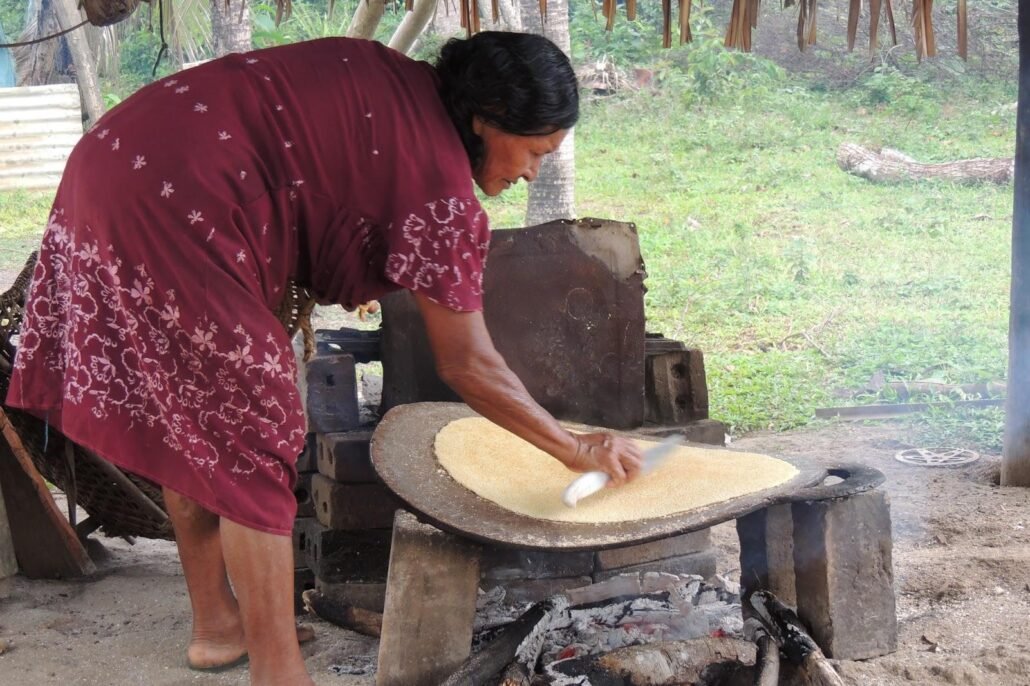
Indigenous communities developed detailed methods for grating, straining, pressing, drying and heating cassava to make it safe to eat. This process requires patience and experience.
A long, woven implement commonly called a matape is used to press liquid from grated cassava. The prepared cassava can then be transformed into several important foods, including cassava bread and farine.
Cassava bread is thin, firm and durable. It can be eaten with fish, meat, stews or other foods and is particularly useful in communities where ingredients must sometimes be stored or carried over long distances.
Farine is made from processed cassava that is toasted into dry grains. It is versatile, filling and able to keep for extended periods when properly prepared.
These foods were practical responses to the realities of the environment long before modern refrigeration and packaged food existed.
Cassareep: the flavour behind a national dish
The liquid extracted during cassava processing can be carefully boiled and reduced to make cassareep.
Dark, concentrated and complex, cassareep helps give pepperpot its distinctive colour and bittersweet flavour. Its preservative qualities also made it especially valuable before refrigeration became widely available.
Pepperpot is now enjoyed across Guyana, particularly during Christmas, but its origins are Indigenous. Over time, it moved beyond the communities in which it began and became one of the country’s most recognised national dishes.
This is an important part of Guyana’s culinary story. Some of the foods now shared across ethnicities and regions began with the knowledge of its first peoples.
Every pot of pepperpot carries that history, whether or not the person eating it stops to consider where it began.
Food guided by the land and seasons
Indigenous food traditions are closely connected to the environment.
In riverain communities, fish may be roasted, smoked, salted, stewed or cooked in leaves. Hunting, fishing and farming practices are shaped by the seasons and by an understanding of local ecosystems.
In the savannahs of the Rupununi, cassava, farine, fish, beef, wild meat and locally grown produce may form part of everyday meals. In forested areas, communities rely on knowledge of plants, fruits, waterways and wildlife developed through generations of living within those environments.
Crabwood oil, Brazil nuts, cashew, wild fruits, hot peppers and other forest products may also play culinary or household roles, depending on the community.
This relationship with the land is not based simply on taking what is available. Traditionally, it involves knowing when to plant, when to harvest, where to fish and how to use resources without exhausting them.
That understanding is increasingly relevant as the world confronts climate change, food insecurity and the loss of biodiversity.
More than something to sample
Amerindian Heritage Month brings opportunities to experience Indigenous foods, craft, dance, clothing and cultural traditions. These celebrations can introduce visitors to foods they may not encounter regularly.
But Indigenous cuisine should not be reduced to a once-a-year attraction.
A bowl of tuma pot or serving of cassava bread may be new to a visitor, but these foods belong to living cultures. They carry family histories, community practices and specialised knowledge.
The people preparing and selling them should be recognised as more than participants in a cultural display. They are farmers, fishers, cooks, craftspeople, producers and keepers of knowledge.
Respectful food tourism should therefore benefit the communities from which these traditions come. That means buying directly from Indigenous producers where possible, paying fairly, seeking permission before photographing people or sacred activities and listening when community members explain the meaning behind a dish or practice.
It also means resisting the temptation to rename, repackage or commercialise traditional knowledge without crediting its source.
Preserving knowledge through the next generation
Like many traditional food cultures, Indigenous cuisine faces pressure from changing lifestyles, migration, imported foods and the loss of language.
When young people leave their communities or become disconnected from traditional methods, knowledge can disappear. A recipe may survive, while the understanding of how to grow, harvest or process its ingredients is lost.
Preservation therefore involves more than documenting finished dishes. It means creating opportunities for elders to teach, encouraging young people to value their food heritage and supporting Indigenous entrepreneurs who are bringing traditional products to wider markets.
Schools, cultural organisations, tourism operators and media platforms also have a role to play. Indigenous people must be given the space to tell their own stories, explain their own traditions and determine how their cultural knowledge is represented.
Taste the heritage with respect
This September, try the cassava bread, farine, tuma pot, smoked fish and pepperpot. Visit Heritage Month exhibitions and community celebrations. Purchase products made by Indigenous farmers, cooks and craftspeople.
But do more than taste.
Ask where the food comes from. Learn how it is prepared. Listen to the people whose families have carried the knowledge forward. Recognise that many of Guyana’s most treasured flavours did not begin in modern kitchens.
Amerindian Heritage Month is a celebration, but it is also a reminder.
Long before Guyana became a nation, its first peoples were cultivating, preparing and preserving food with extraordinary ingenuity. Their knowledge helped shape the country’s cuisine and continues to nourish its people.
To celebrate Guyanese food honestly, we must honour where its story began
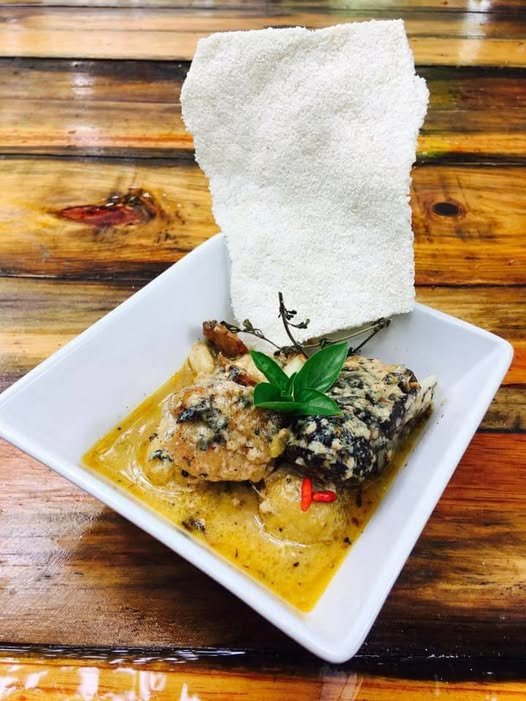
Tuma Pot with Cassava Bread. Photo Courtesy: Delven Adams, Backyard Cafe


Leave a Reply
Want to join the discussion?Feel free to contribute!