
A Table That Tells the Story of a Nation: Why Georgetown Is One of the Caribbean’s Most Exciting Food Cities
There are destinations where food is something you enjoy after sightseeing. Then there is Georgetown, Guyana, where food is the sightseeing.
The capital of South America’s only English-speaking nation has quietly become one of the hemisphere’s most compelling culinary destinations—not because of celebrity chefs or Michelin stars, but because every meal tells the story of a people. Few places in the world can claim a cuisine shaped so completely by Indigenous, African, Indian, Chinese, Portuguese, and European traditions, all of which continue to live side by side on the same table.
In Georgetown, breakfast may begin with hot bakes and saltfish before giving way to Chinese-style chow mein for lunch, Indian curry and roti in the afternoon, and African-inspired cook-up rice or pepperpot for dinner. Somehow, it all feels unmistakably Guyanese.
The World’s Biggest Fusion Kitchen
Long before “fusion cuisine” became fashionable, Guyanese families were living it.
Centuries of migration and cultural exchange created a cuisine unlike any other in the Caribbean. Indigenous knowledge introduced cassava, cassareep, farine and fresh river fish. Africans contributed one-pot cooking traditions, coconut-rich dishes and ingenious methods of using local ingredients. Indian indentured labourers transformed the culinary landscape with curries, rotis and spices. Chinese immigrants popularized stir-fried noodles and fried rice, while Portuguese settlers introduced breads, pastries and culinary techniques that remain beloved today.
Rather than competing with one another, these traditions blended naturally over generations.
The result is a food culture where a single family gathering might feature pepperpot beside garlic pork, fried rice next to curry duck, metemgee alongside Chinese-style chow mein, and homemade pine tarts waiting for dessert.
There are few countries where multiculturalism is quite this delicious.
Markets That Feed a Nation
To understand Guyanese cuisine, you have to begin where it begins—with the markets.
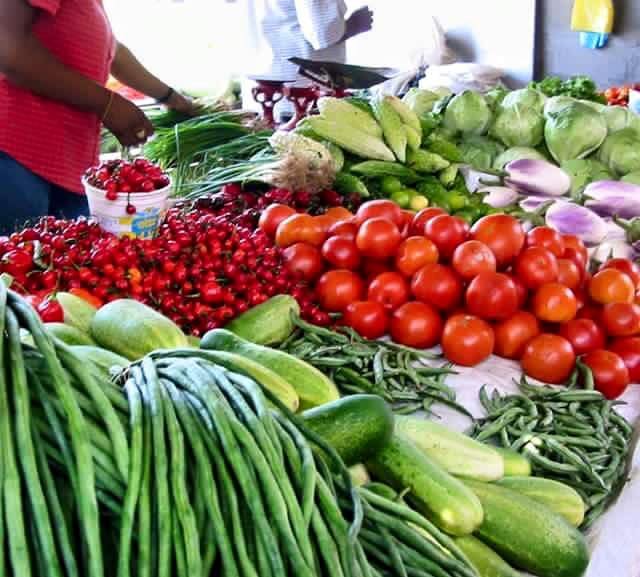
Before sunrise, vendors at Bourda Market and Stabroek Market arrange mountains of bora, boulanger, ochro, eddoes, cassava, breadfruit, mangoes, golden apples, peppers and herbs. Fishermen unload fresh snapper, bangamary, gilbaka and shrimp while butchers prepare meats destined for family kitchens across the country.
These markets are more than places to shop.
They are classrooms where recipes are exchanged, traditions are preserved, and generations learn which pepper belongs in pepperpot or which cassava makes the finest farine.
Every ingredient has a story.
Every vendor has one too.
The Backyard That Captured the World’s Attention
Perhaps nowhere captures the spirit of Guyanese hospitality better than Backyard Café.
Hidden behind an ordinary home in West Ruimveldt, Chef Delven Adams transformed his family’s backyard into one of Guyana’s most celebrated dining experiences. Guests often begin with a guided market tour before sharing a meal built entirely around seasonal local ingredients. What feels like lunch quickly becomes a lesson in history, agriculture and culture.
There are no gimmicks.
Just authentic Guyanese hospitality served one plate at a time.
It is proof that some of the world’s most memorable restaurants don’t need grand buildings—only great stories and exceptional food.
Street Food That Deserves Its Own Passport
While Georgetown boasts elegant restaurants and modern cafés, the city’s true heartbeat often lives on its sidewalks.
Egg balls disappear from roadside vendors almost as quickly as they are fried.
Vendors expertly fill paper bags with cassava balls, pholourie, plantain chips and cheese rolls.
You’ll find fresh cane juice on one corner, mauby or swank on another, while roadside grills perfume entire neighbourhoods with sizzling chicken, pork and seafood.
The food is affordable.
The conversations are free.
And the flavours linger long after the last bite.
More Than a Meal
Visitors often arrive expecting Caribbean food.
They leave having discovered something much more complex.
Guyanese cuisine cannot be placed neatly into a single category. It borrows from South America, the Caribbean, Asia, Africa and Europe while remaining entirely its own.
That diversity is what makes Georgetown so remarkable.
Food is not simply something served here.
It is history passed from grandparents to grandchildren.
It is migration preserved through recipes.
It is identity expressed through cassareep, curry powder, fresh herbs and handmade bread.
The Future of Culinary Tourism
As Guyana continues to attract international attention for its economic growth, another story deserves equal recognition.
Its food.
Travelers are increasingly seeking authentic cultural experiences rather than manufactured attractions. Georgetown offers exactly that—a city where culinary traditions remain rooted in everyday life rather than staged for tourists. Culinary experiences centred around market tours, family-run restaurants, local producers and immersive dining have become an important part of Guyana’s tourism offering.
For those willing to venture beyond familiar Caribbean destinations, Georgetown offers something increasingly rare.
A cuisine that has never needed reinvention because it has always been authentic.
And in every bowl of pepperpot, every plate of metemgee, every serving of curry, and every freshly fried egg ball, visitors discover what Guyanese have always known:
The best way to understand Guyana is to sit at its table.



Leave a Reply
Want to join the discussion?Feel free to contribute!