
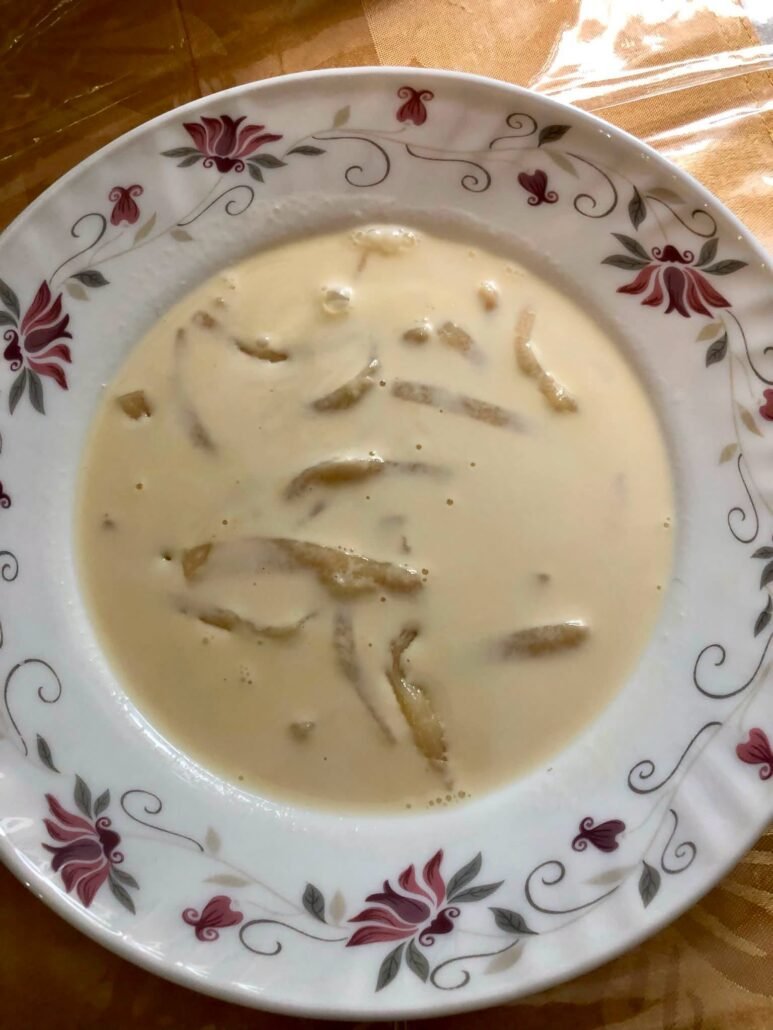
Doodhpitty: Guyana’s Comforting Roti Porridge
Among Guyana’s many treasured comfort foods, Doodhpitty holds a special place. Creamy, fragrant, and wonderfully satisfying, this humble dish transforms simple pantry ingredients into something that feels like home. Whether made with freshly prepared dough or yesterday’s leftover oil roti, Doodhpitty is a reminder that some of the best Guyanese recipes were born from resourcefulness and family tradition.
While it may not be as internationally recognized as pepperpot or metemgee, Doodhpitty remains a beloved recipe in many Guyanese homes, especially within the Indo-Guyanese community, where it has been passed down through generations.
A Taste of History
Doodhpitty has its roots in the traditions brought to Guyana by Indian indentured laborers who arrived beginning in 1838. They carried with them recipes that celebrated simple ingredients and made the most of what was available.
The name comes from the Hindi word “doodh,” meaning milk. The “pitty” refers to the small pieces of dough or roti that are cooked in the milk. Over time, the dish evolved in Guyana, taking on its own identity while preserving its Indian heritage.
Today, Doodhpitty represents the blending of cultures that defines Guyanese cuisine, where old-world traditions adapted to local ingredients became entirely new culinary classics.
Two Traditional Ways to Make It
One of the most interesting aspects of Doodhpitty is that there are two authentic ways to prepare it.
The first, and perhaps the oldest, uses small pieces of freshly made dough. The dough is rolled, cut or pinched into bite-sized pieces, then simmered in sweetened milk until tender.
The second version, which many Guyanese grew up eating, is made with leftover oil roti (paratha). Instead of letting yesterday’s roti go to waste, it is torn into small pieces and gently simmered in spiced milk until it softens into a rich, creamy porridge. This version became a practical way for families to stretch meals while creating something every bit as delicious as the original. It is still considered one of the best examples of Guyanese home cooking, where nothing useful was ever wasted.
Humble Ingredients, Incredible Flavor
Doodhpitty requires only a few everyday ingredients, yet the result is rich and comforting.
Milk forms the base of the dish and is gently infused with cinnamon sticks, cloves, vanilla, and sometimes freshly grated nutmeg or cardamom. Brown sugar, especially Demerara sugar, is often the preferred sweetener because it gives the porridge a deeper caramel flavor.
As the dough or pieces of roti cook, they absorb the fragrant milk while releasing just enough starch to create a silky, lightly thickened consistency.
Every spoonful is warm, creamy, and delicately spiced.
Every Family Makes It Differently
Like many traditional Guyanese recipes, there is no single version of Doodhpitty.
Some families prepare it with fresh dough every time, while others insist it tastes best with leftover oil roti. Some cooks add evaporated milk or condensed milk for extra richness, while others keep the recipe simple with fresh milk and brown sugar. Vanilla, nutmeg, raisins, and even a splash of coconut milk can all find their way into different family recipes.
These variations are part of the dish’s charm. Every household has its own version, often learned by watching parents or grandparents rather than following a written recipe.
A Lesson in Resourcefulness
Doodhpitty also tells the story of a generation that wasted very little. Leftover roti was never seen as something to throw away. Instead, it became the foundation for another comforting meal.
This practical approach reflects a larger tradition found throughout Guyanese cuisine, where yesterday’s ingredients often became today’s breakfast or dessert. What began as a way to avoid waste eventually became a cherished recipe in its own right. Many Guyanese today specifically make extra oil roti knowing that the leftovers can become Doodhpitty the next day.
More Than Just a Breakfast
Although many people enjoy Doodhpitty for breakfast, it is equally popular as an evening snack or simple dessert. A warm bowl on a rainy day or a cool evening offers comfort that few dishes can match.
For members of the Guyanese diaspora, the aroma of simmering milk, cinnamon, and vanilla often brings back memories of childhood kitchens and family gatherings. It is one of those recipes that instantly reconnects people with home, no matter where they live.
Preserving an Everyday Tradition
As Guyanese cuisine continues to gain international recognition, it is important to celebrate not only the country’s iconic dishes but also the everyday recipes that shaped generations.
Doodhpitty is more than a bowl of sweet milk and dough. It is a story of migration, adaptation, thrift, and family. Whether prepared with freshly made dough or lovingly transformed from leftover oil roti, it remains one of Guyana’s most comforting culinary traditions and a delicious reminder that the simplest recipes often leave the deepest memories.
Photo Credit: Suri the Foodie



Leave a Reply
Want to join the discussion?Feel free to contribute!