
Seven Curry: The Vegetarian Feast That Defines Guyanese Hindu Celebrations
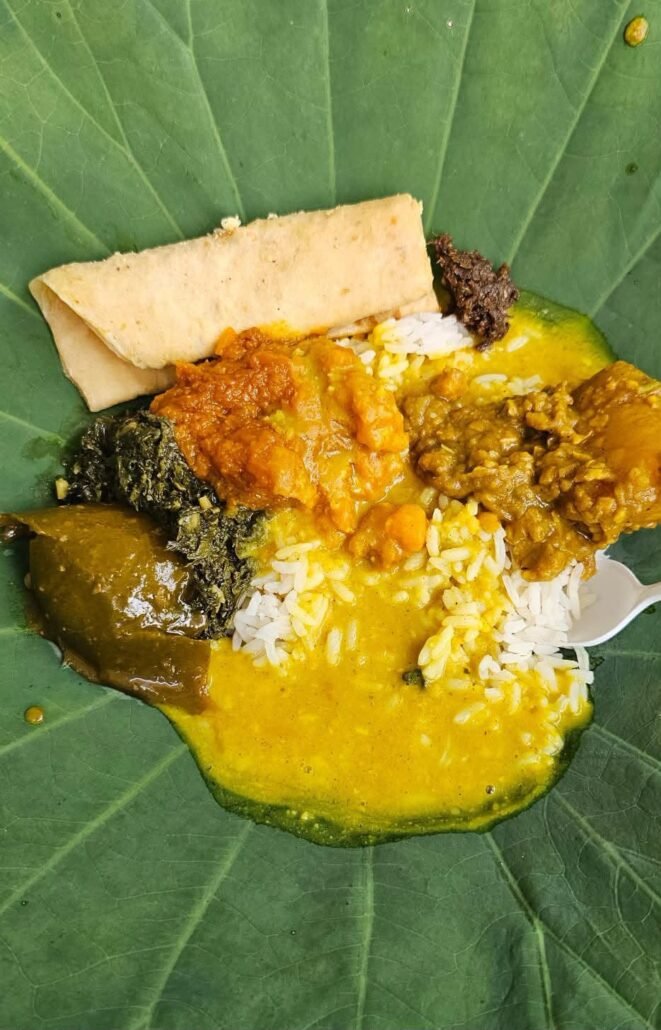
Photo Credit: Suri the Foodie
There are few meals in Guyana that carry as much cultural significance as Seven Curry. It is more than a collection of delicious vegetarian dishes. It is a celebration of faith, family, heritage, and community that has been passed from one generation to the next for well over a century.
Whether served at a Hindu wedding, a religious puja, or a special family gathering, Seven Curry represents one of the finest examples of Guyana’s rich multicultural identity. While its roots lie in Indian tradition, it has evolved into something uniquely Guyanese, a feast that tells the story of our history with every bite.
A Tradition Born from Heritage
The origins of Seven Curry can be traced back to the arrival of Indian indentured labourers in British Guiana between 1838 and 1917. These immigrants brought with them not only their language, religion, and customs, but also a rich culinary tradition centered around vegetables, legumes, spices, and communal cooking.
Over time, the ingredients available in Guyana shaped the dishes they prepared. Local pumpkins, bora, cassava, green mangoes, coconut, and tropical spices blended seamlessly with traditional Indian cooking techniques to create a cuisine unlike anywhere else in the Caribbean.
Today, Seven Curry remains one of the most enduring expressions of Indo-Guyanese culture.
Why Seven?
Contrary to popular belief, there is no universal list of seven curries.
The number seven carries spiritual significance in Hinduism, representing completeness and balance. Rather than referring to seven specific recipes, the meal traditionally consists of seven vegetarian preparations served together, each contributing its own texture, flavour, and symbolism.
Ask ten Guyanese families what belongs in Seven Curry and you may receive ten different answers.
That is part of its beauty.
A Traditional Guyanese Seven Curry
Although recipes vary from region to region and family to family, a classic Seven Curry meal often includes:
Pumpkin Curry
Sweet, soft pumpkin cooked with curry powder, garlic, geera (cumin), and herbs. Its natural sweetness balances the richer curries on the plate.
Channa and Potato Curry
One of the most recognisable dishes of the meal. Chickpeas and potatoes are simmered in fragrant curry until the flavours meld into a rich, comforting sauce.
Aloo Curry
Simple but essential, curried potatoes provide the foundation of many Seven Curry plates.
Bora Curry
Fresh bora (long beans) cooked with potatoes and spices adds texture and freshness.
Katahar Curry
Young jackfruit is transformed into a hearty curry with a texture remarkably similar to meat, making it one of the most satisfying dishes on the table.
Baigan
Some families prepare roasted baigan choka, while others serve curried eggplant. Both are staples in many traditional feasts.
Mango
Green mango appears either as a lightly curried dish or as spicy mango achar, adding a welcome burst of acidity that cuts through the richness of the meal.
More Than Just Curry
Despite its name, Seven Curry is never just about curry.
A complete meal is often accompanied by:
- Freshly made dhal
- Buss-up-shut (paratha)
- Dhal puri
- Steamed rice
- Coconut choka
- Mango achar
- Tamarind chutney
- Pepper sauce
- Homemade pickles
Together, these dishes create layers of sweet, savoury, spicy, earthy, and tangy flavours that define traditional Guyanese cooking.
The Wedding Feast Everyone Waits For
For many Guyanese, attending a Hindu wedding means looking forward to the Seven Curry meal almost as much as the ceremony itself.
Traditionally, family members, neighbours, and friends gather the day before the wedding to peel vegetables, grind spices, prepare dhal, knead dough, and cook enormous pots of curry over open fires. It is a community effort where everyone has a role to play.
Long before professional caterers became common, these meals were prepared almost entirely by volunteers. The kitchen became a place of storytelling, laughter, and shared memories, with recipes handed down through observation rather than written instructions.
Even today, many families continue this tradition, preserving not only recipes but a way of life.
Every Family Has Its Own Recipe
No two Seven Curry meals are identical.
Some families insist that pumpkin must be sweetened slightly. Others refuse to add sugar. Some prepare katahar only during its season, while others substitute eddoes or cassava. The level of spice varies widely, as does the consistency of the curries.
These differences are not mistakes. They are family signatures.
Every cook leaves a personal mark on the meal, making Seven Curry one of Guyana’s most diverse culinary traditions.
A Meal That Brings People Together
Perhaps the greatest strength of Seven Curry is that it reminds us food is about far more than eating.
It represents generosity, hospitality, faith, and togetherness. It is a meal prepared with patience, shared with gratitude, and remembered long after the last plate has been cleared.
In a country celebrated for its six peoples and many cultures, Seven Curry stands as one of Guyana’s finest culinary traditions, a dish that honours the past while continuing to bring families and communities together today.
Whether enjoyed beneath a wedding tent in Berbice, at a village mandir in Essequibo, or around a family table in Georgetown, Seven Curry remains one of the true tastes of Guyana.
Did You Know?
- Seven Curry is traditionally 100% vegetarian, reflecting Hindu dietary customs during religious ceremonies.
- There is no official list of the seven curries—recipes vary by family, village, and region.
- The meal is traditionally eaten with your hands, using pieces of dhal puri or paratha to scoop up the curries.
- Preparing Seven Curry for a wedding often begins the day before, with relatives and neighbours working together to cook for hundreds of guests.
- Although deeply rooted in Indo-Guyanese culture, Seven Curry has become a beloved part of Guyana’s national culinary identity, enjoyed and appreciated by people of every background

 Photo Credit: https://foodienotachef.com/
Leave a Reply
Want to join the discussion?Feel free to contribute!